
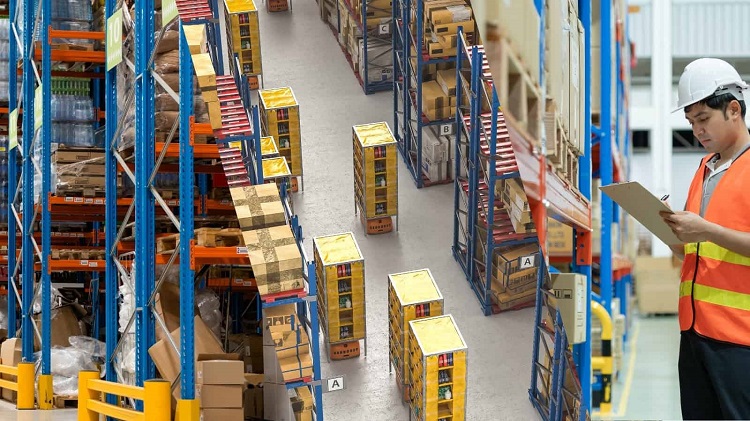
The fight for market dominance in Singapore starts with an inventory management system in Singapore that actually works. This is not hyperbole. Walk through any struggling business in the Lion City and you will find the same disease: inventory chaos. Too much stock gathering dust. Too little of what customers actually want. The warehouse becomes a graveyard of bad decisions, and the profit margins bleed out slowly, then all at once.
Why Singapore Businesses Cannot Afford Inventory Mistakes
Singapore operates on different rules than the rest of the world. Space costs money. Real money. Every square metre of warehouse space in this city-state carries a price tag that would make landlords elsewhere weep with envy. You cannot afford to fill that expensive space with stock that does not move.
The stakes are brutal and clear. Implement a proper stock management system in Singapore or watch your competitors devour your market share. There is no middle ground anymore.
Consider the mathematics of failure:
- Warehousing costs in Singapore rank among the highest globally
- Dead stock occupies premium space that could house fast-moving inventory
- Stockouts in Singapore’s demanding market send customers straight to competitors
- Manual tracking errors multiply in cost when space and opportunity costs run high
The Singapore Advantage: Infrastructure That Demands Excellence
Singapore’s infrastructure is world-class. The port, the airport, the logistics networks. Everything connects with the kind of efficiency that makes other nations jealous. But here is the contradiction: all that infrastructure is wasted if your inventory control system in Singapore cannot keep pace.
The government pushes digitalisation hard. The Smart Nation initiative is not merely rhetoric. It translates into real pressure on businesses to modernise or fall behind. An inventory management solution in Singapore needs to meet standards that would be considered excessive elsewhere.
What Singapore Businesses Actually Need
Strip away the consultant speak and marketing noise. What does a functional inventory tracking system in Singapore actually require?
Real-time visibility across every location. Singapore businesses often operate across multiple sites: the main warehouse, retail outlets, pop-up stores, consignment locations. Your system needs to track every item, everywhere, all the time.
Integration with regional and global supply chains matters here more than almost anywhere else. Singapore is a trading hub. Your stock management software in Singapore must handle imports, exports, customs documentation, and multi-currency transactions without breaking stride.
Features That Separate Functional from Useless
The warehouse management system Singapore you choose needs these capabilities as baseline, not add-ons:
- GST compliance built into every transaction because IRAS does not accept excuses
- Multi-location tracking that reflects Singapore’s compact but complex retail landscape
- Mobile access for staff working across different sites and checking stock on the floor
- Demand forecasting that accounts for Singapore’s unique seasonal patterns and shopping behaviours
Barcode and QR code scanning should be standard. RFID tracking for high-value items. Automated reorder points that trigger before you hit stockout situations. Batch and serial number tracking for products that require it.
The Numbers Do Not Lie
Research into Singapore’s warehouse management practices reveals something striking. As one logistics study noted, “Inventory management systems in Singapore that incorporate automation and real-time tracking reduce stock discrepancies by an average of 75% to 85% compared to manual methods.”
That is not incremental improvement. That is transformation. Yet businesses still resist, clinging to spreadsheets and manual counts as if the old ways will somehow become viable again. They will not.
Integration: The Make or Break Factor
Your inventory control solution in Singapore exists within an ecosystem. It must communicate with your accounting software for accurate COGS calculations and financial reporting. It needs to sync with your e-commerce platforms because Singapore consumers shop online aggressively. It should connect with your POS systems so retail sales update inventory instantly.
The businesses succeeding in Singapore right now run on connected systems where data flows automatically. Inventory numbers update across all platforms simultaneously. Reorders trigger based on actual sales velocity, not gut feelings.
The Cost of Delay
Every month you operate without a proper stock control system in Singapore costs you money. The overstocking. The stockouts. The staff hours wasted on manual counts and reconciliation. The customer frustration when popular items run out.
Your competitors are not waiting. The businesses gaining ground in Singapore’s market have their inventory under control. They know exactly what they have, where it is, and how fast it is moving. They make purchasing decisions based on data, not guesswork.
Taking the Leap
Implementation will not be painless. Expect resistance from staff comfortable with the old ways. Plan for the disruption of a proper stock audit. Budget for training that actually works.
But the alternative is worse. The alternative is watching your margins shrink while competitors with better inventory visibility steal your customers. The alternative is paying premium Singapore prices for warehouse space filled with stock you cannot sell.
The businesses that will dominate Singapore’s market in the coming years are the ones investing now in proper infrastructure, including a robust inventory management system in Singapore that meets the unique demands of this exceptional market.

 Build Your Business With Creative Ideas - workin.business.blog